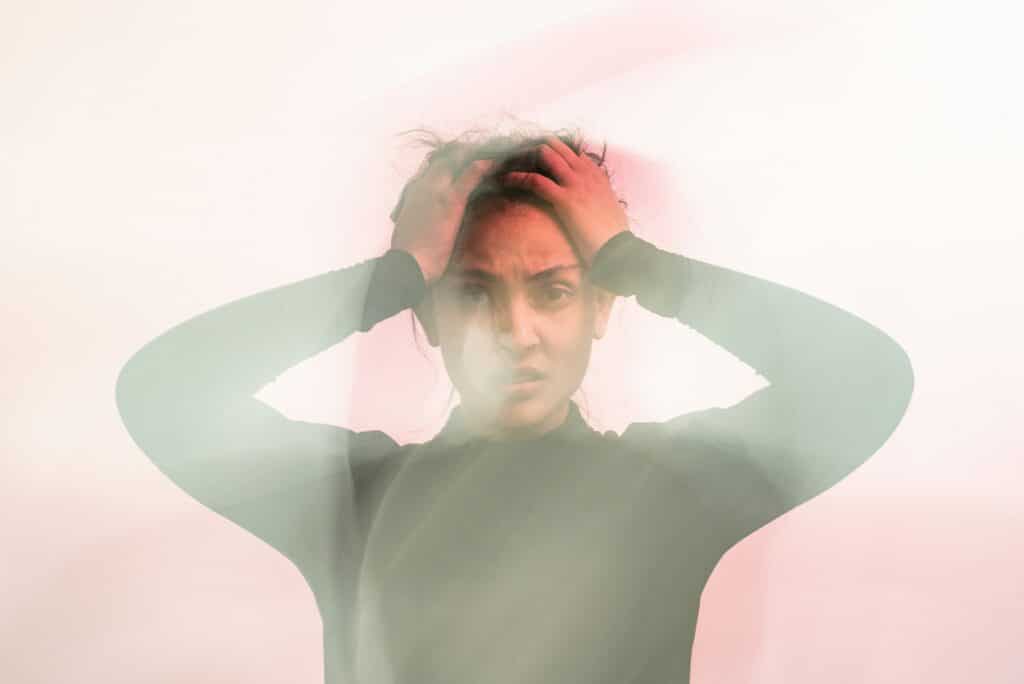
Have you ever felt rejection in your body?
Not just as a sad or anxious thought, but as a real ache. A tightness in your chest. A heavy, sick feeling in your stomach. Something that feels a lot like heartache.
If you can relate to that, you’re not imagining it. And you’re definitely not “too sensitive”.
I recently attended a brilliant training session by Emma Whymark and Lisa Poole of Attuned Approach, all about rejection sensitivity in neurodivergent people. It helped me put words to something so many of my clients describe – and something I’ve felt myself – so I wanted to share some of what they taught.
What is RSD?
RSD stands for Rejection Sensitive Dysphoria. It’s a term often linked to ADHD, and it describes an intense emotional response to real or perceived rejection, criticism or failure.
Emma and Lisa explained that it helps to think of rejection sensitivity as a spectrum.
At one end, there’s everyday rejection sensitivity. It can be frequent – sometimes daily – and intense, but it isn’t always debilitating. It might show up as rumination, withdrawal or defensiveness.
At the other end is RSD. It tends to be episodic, but overwhelming when it hits. The reaction can feel out of proportion to what happened, it’s much harder to regulate, and it can bring on executive paralysis.
And very often, people describe it as pain.
Why does rejection feel so threatening?
To explain why RSD happens, Emma and Lisa took us right back to early human history.
For our ancestors, belonging to a group was the difference between life and death. The tribe meant shelter, protection, shared food and safety in numbers. Being cast out could be fatal.
So our brains evolved to detect any threat to our belonging.
When we sense rejection, criticism, comparison, judgement or failure, an internal alarm goes off. The nervous system activates, and we may find ourselves in fight, flight, freeze or fawn.
On the inside, that can look like shame, rumination, anxiety and self-criticism. On the outside, it might look like withdrawal, defensiveness, anger or people pleasing.
Over time, repeated experiences can shape what William Dodson calls a “rejection lens” – a way of seeing the world through the expectation of being rejected.
It’s not “just in your head”
This was the part of the training I found most validating.
Research consistently shows that social pain – exclusion, rejection and criticism – activates the same brain regions as physical pain. And for ADHD brains, those regions show even stronger activation.
So when you say rejection hurts, you’re being accurate. RSD literally shows up like pain.
The link with heartache
When RSD is triggered, the nervous system releases a surge of stress chemicals called catecholamines, including adrenaline and noradrenaline. These flood the system and can bring on emotional overwhelm, alongside very real physical pain, often felt in the heart, chest or stomach.
The good news is that it’s usually temporary. With time, it eases.
Emma and Lisa also shared a fascinating parallel with Takotsubo syndrome, sometimes called “broken heart syndrome”. This is a stress-induced heart condition that can follow grief, loss, a breakup, emotional shock or extreme stress. It mimics a heart attack and is clinically measurable.
Takotsubo syndrome shows us that emotionally significant experiences can create measurable responses in both the brain and the body. We don’t yet fully understand why RSD pain shows up in the heart, chest or stomach for so many people – but this connection helps make sense of it.
Please note: any new or unexplained chest pain should always be checked by a medical professional.
Emotional sunburn
In their training, Emma and Lisa shared a brilliant analogy for RSD – emotional sunburn.
Imagine spending all day in blistering heat with no suncream. You’d end up very burnt and in a lot of pain.
Once you’re burnt, any touch hurts. A light touch. A neutral touch. An accidental touch.
RSD can work the same way. When you’re already “burnt”, even small social moments can sting:
- A delayed reply to a message
- A change in someone’s tone
- No acknowledgement
- A brief facial expression
- Constructive feedback
The person may not have meant any harm at all. But the pain is still real.
Not everyone feels it physically
Emma and Lisa were clear that not everyone with RSD feels it as a physical ache, and that’s okay.
Differences in interoception (how we sense what’s happening inside our bodies), alexithymia, autism and trauma can all change how the brain processes physical sensations.
So RSD might instead feel like being dysregulated, overwhelmed or shut down. It might feel like losing your train of thought, or just that something feels “off”.
That’s not less valid. It’s simply experienced differently.
Why this understanding matters
Accepting that RSD can genuinely hurt reduces shame. It gives us a deeper understanding of what’s happening. And it helps us offer better support, to ourselves and to the people around us.
The impact of RSD reaches into so many areas of life – relationships, confidence, mental wellbeing, self-advocacy, decision-making, education and employment. Taking it seriously matters.
Suncream and after sun: soothing the sunburn
Going back to the sunburn analogy, Emma and Lisa described two kinds of support.
Suncream helps prevent the burn in the first place:
- Good communication, with clarity and reassurance
- Understanding and trust
- Healthy boundaries
- Supportive, accepting relationships
- Regulation and self-awareness
- Compassion
After sun helps soothe the burn once it’s there:
- Validation and reassurance
- Sensory regulation
- Time
- Reframing towards your strengths
- Self-compassion
There are also natural forms of pain relief that can help, such as proprioceptive input (deep pressure or movement), connection with people you feel safe with (hello, oxytocin) and exercise (endorphins). Some people also find certain ADHD medications ease their RSD, so it can be worth a conversation with your prescriber.
What doesn’t help
They also talked about what doesn’t help. When someone is in the middle of an RSD response, these phrases can make things worse:
- “You’re overreacting.”
- “Just ignore it.”
- “It wasn’t a big deal.”
Neither does expecting someone to be calm and rational while they’re still “burnt”. Responses like these invalidate real pain and can lead to deeper shutdown or shame.
A gentle closing thought
If you feel rejection in your body, there’s nothing wrong with you. Your brain is doing exactly what it evolved to do – protecting your sense of belonging – just with the volume turned up.
Understanding that can be the first step towards meeting yourself with a little more kindness.
If this is something you’d like support with, coaching can be a safe space to explore your own patterns around rejection sensitivity and find what helps you. You’re always welcome to book a free discovery call.
With thanks to Emma Whymark and Lisa Poole of Attuned Approach, whose training on rejection sensitivity inspired this post.