
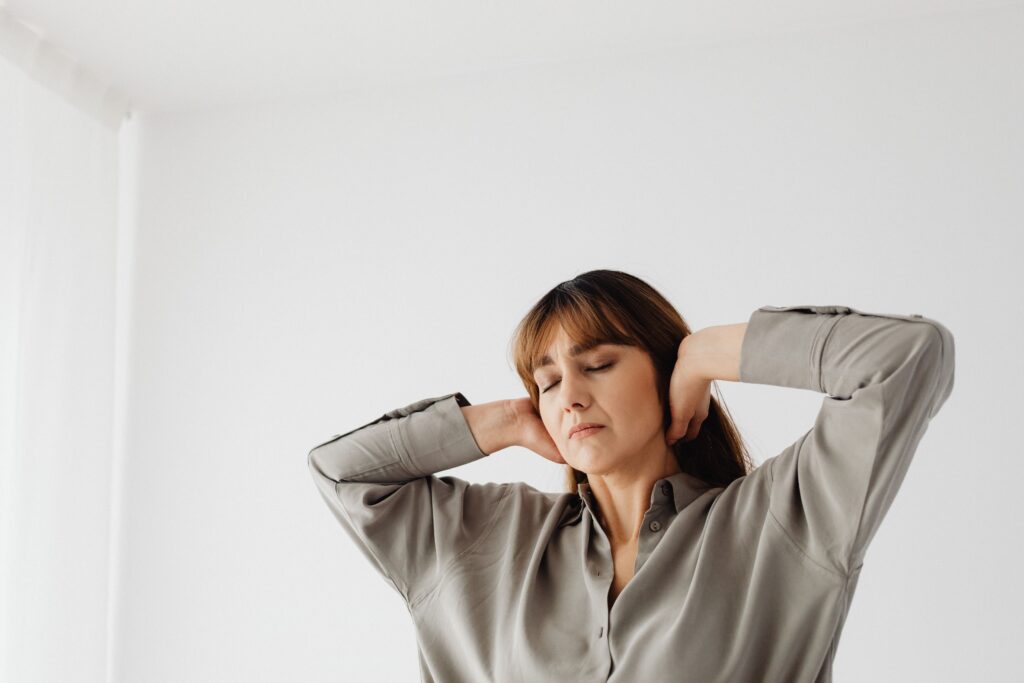
A few weeks ago, I was walking through Winchester market on one of the busier days and found myself doing something that has become increasingly common over the last few years. As I approached the fish stall and the cheese stall, I instinctively pulled my jumper up over my nose and quickened my pace, eager to get past them as quickly as possible.
Had anybody been watching, they might have assumed I was being dramatic. The truth is that the smells felt genuinely overwhelming.
What has fascinated me since discovering my ADHD and autism in later life is how many things I now look back on and view through a completely different lens. Sensory sensitivities are one of them.
Although I can see now that I’ve always been sensitive to certain sounds, smells and environments, it wasn’t something I paid much attention to when I was younger. I simply assumed that everyone experienced the world in the same way and that I was somehow less tolerant than other people.
What has become increasingly obvious to me, however, is that my sensory sensitivities became much more noticeable during perimenopause and menopause.
These days, strong smells can stop me in my tracks. Fish markets, perfume counters, heavily fragranced shops and even walking through a crowded shopping centre can sometimes feel overwhelming. It’s not always one particular smell, either. More often, it’s the combination of dozens of different scents all competing for my attention at the same time.
I find myself noticing things that other people seem completely oblivious to. The smell of somebody’s shampoo, a strong fabric conditioner lingering on clothing, aftershave, perfume, cleaning products. Sometimes it feels as though my brain is attempting to process every scent in the room simultaneously.
The same is true of sound. One of the things I struggle with most now is background noise. Restaurants and cafés are often the worst offenders. There seems to be a growing trend for venues to play music at a volume that makes conversation unnecessarily difficult, and I find myself wondering whether anybody has actually stopped to consider the experience from the customer’s perspective.
If I have chosen to meet a friend for lunch, it’s because I want to enjoy their company and conversation. I don’t particularly want to spend the next hour trying to lip-read over a soundtrack that feels more appropriate for a nightclub.
What I have noticed is that when there is loud music, multiple conversations happening nearby and the usual clatter of plates, glasses and cutlery, my brain struggles to separate one source of information from another. Instead of tuning out the background noise and focusing on the person sitting opposite me, everything arrives with equal importance. By the time I leave, I often feel disproportionately tired and I used to have no idea why.
And then there is Gatwick Airport. More specifically, duty free. For many people, duty free is simply a place to browse before a flight. For me, it is probably one of the most overwhelming environments imaginable. Bright fluorescent lighting, crowds of people, loud announcements, background music and overpowering fragrances all compete for attention at the same time. Walking through it feels less like shopping and more like navigating an obstacle course designed specifically to overwhelm the senses. This is another environment I will power-walk through, once hand over my mouth and nose, the other pulling along my cabin bag!
For years, I assumed that my reactions meant I was being difficult, intolerant or overly sensitive. I suspect many late-discovered neurodivergent women will recognise that thought process.
So many of us have spent our lives minimising our own discomfort. We tell ourselves not to make a fuss. We assume everyone else is coping perfectly well. We worry about being seen as awkward, demanding or high-maintenance. As a result, we often remain in environments that feel genuinely uncomfortable because we believe that is what we’re supposed to do.
What I understand now is that there is a significant difference between mild discomfort and sensory overload. Although research into neurodivergence and menopause is still developing, many women report that sensory sensitivities become more noticeable during perimenopause and menopause. As hormone levels fluctuate and decline, changes in sleep, stress tolerance, emotional regulation and nervous system functioning can leave us with less capacity to tolerate things that we may previously have managed to push through.
For some women, this becomes one of the clues that eventually leads them towards discovering ADHD, autism or both. For others, it simply provides an explanation for why the world suddenly seems louder, brighter, busier and far more intense than it once did.
Perhaps the biggest shift for me has been learning that accommodating myself is not something I need to feel embarrassed about. These days, if a restaurant seats me directly underneath a speaker, I’ll ask whether we can move. If the music is excessively loud, I’ll ask whether it can be turned down. If a café is always crowded and noisy at lunchtime, I’ll choose a quieter time to visit. Noise-cancelling headphones have become one of my favourite purchases, and I have absolutely no hesitation in using them when I need to.
The difference is that I no longer view these things as weaknesses. They’re accommodations. We accommodate people who wear glasses without questioning whether they should simply try harder to see. We accommodate physical disabilities without expecting people to suffer in silence. Yet many neurodivergent people have spent years believing that they should simply tolerate environments that leave them overwhelmed and exhausted.
I no longer agree with that.
If I’m paying for a meal, a coffee or a day out, I want it to be enjoyable. I want to be comfortable. I want to be able to hear the people I’m with. I want to leave feeling relaxed rather than depleted. Most importantly, I have come to realise that my comfort matters just as much as anyone else’s.
Discovering my neurodivergence has helped me understand that my sensory experiences are real, even when they differ from those of the people around me. Menopause has reinforced that lesson by making it impossible to ignore.
The world may well have become louder, brighter and smellier over the last few years. Or perhaps I have simply become less willing to ignore what my nervous system has been trying to tell me all along. Either way, I no longer see accommodating my needs as something to apologise for. I see it as an act of self-respect.